In the previous post, we talked about the street names in York, particularly some of the more obscure names. These were, in many cases, streets which have been around, in generally the same place, for centuries, preserving a flavour of the layers of York’s history. Street names show the occupation of a place over time, even if they are relatively new names or new streets: they show how people lived in the area, how they came to be there, and how the place developed. Today we will look at Victoria, BC.
Here, the broad categories of odonyms might be different, but the effect is the same: the history of the place shines through in the place names. In Victoria, the places tend to be named for individual people or families, notably early settlers or governors of Victoria post-colonisation; local geography, the First Nations culture of the area, or just generally how the land was used historically.
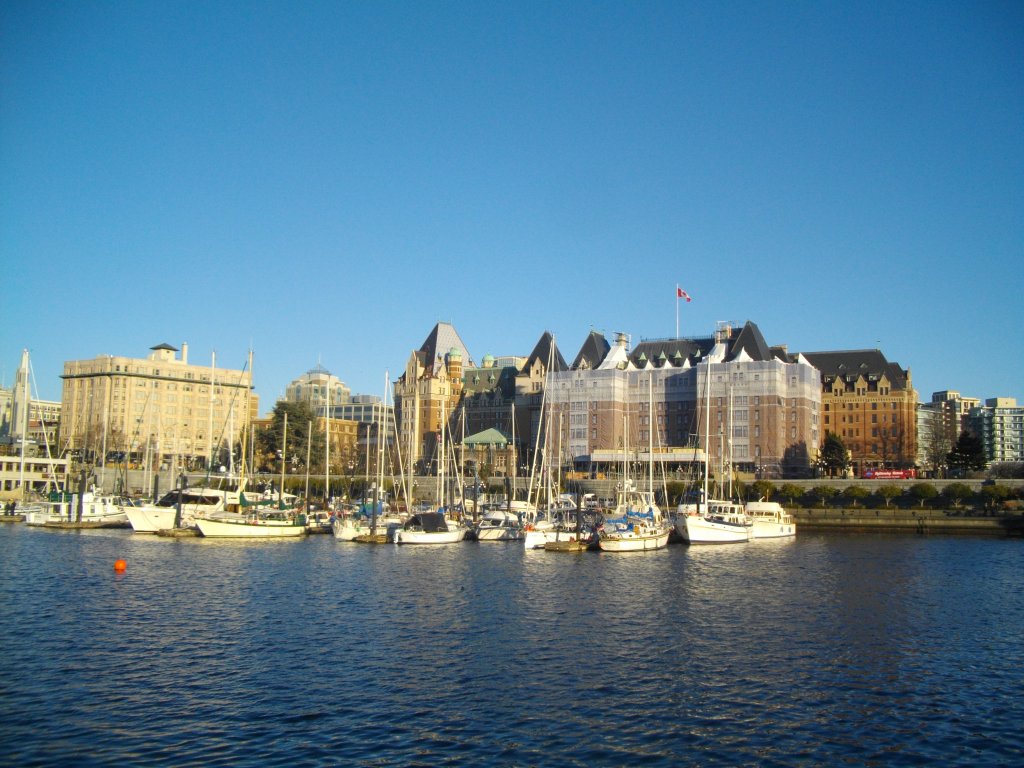
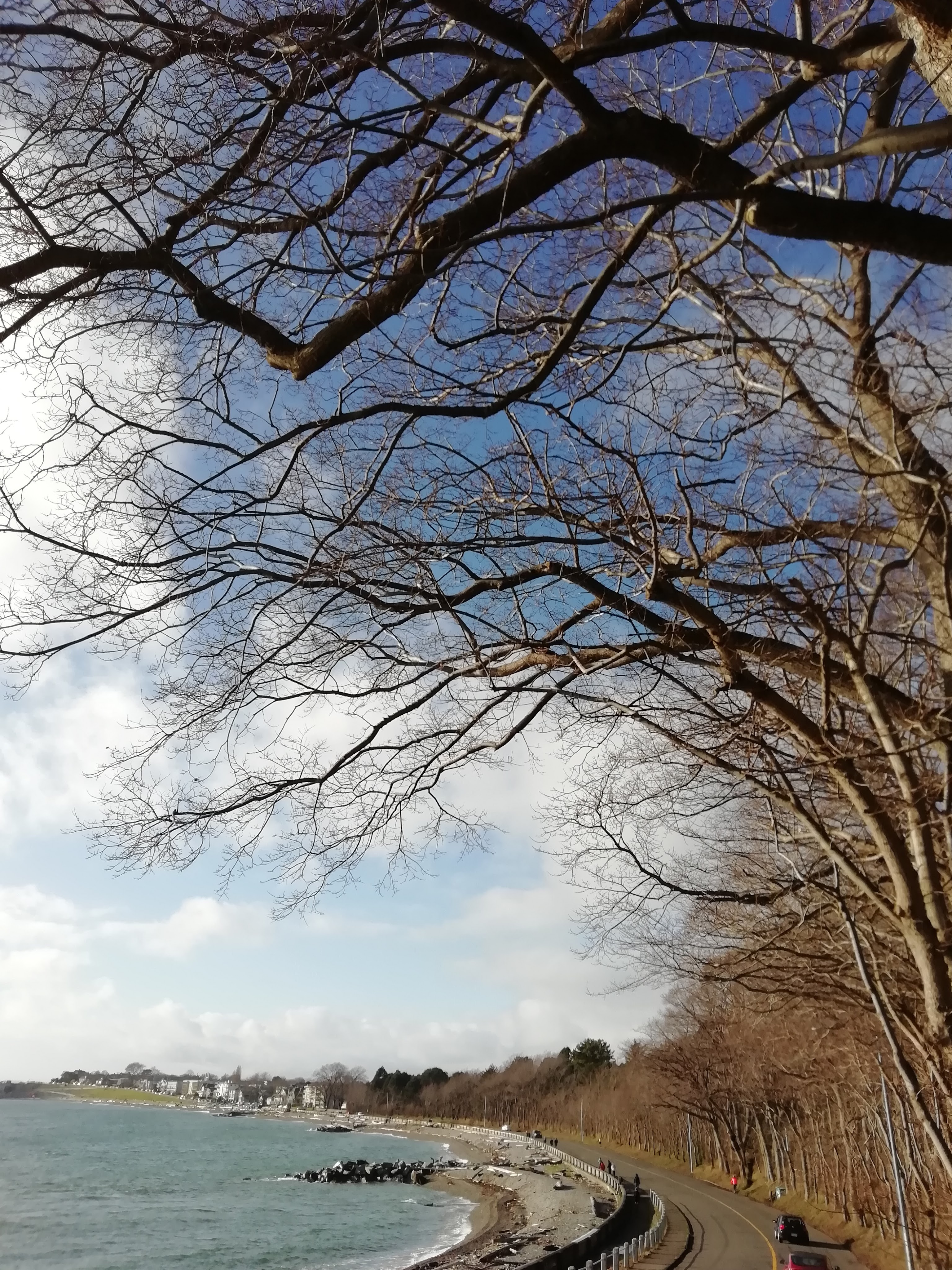
Victoria, British Columbia, is my home city. It is the capital of British Columbia, and it is located at the southern tip of Vancouver Island (not to be confused with Vancouver the city, which is a couple of hours’ ferry ride away on the mainland). And yes, the city absolutely was named for Queen Victoria.
Victoria is not a particularly large city in terms of population, but it is large in terms of the space it covers. The downtown core of the city is only a small part of ‘Victoria’ and many Victoria residents actually live in the suburban or rural areas around the city. If you get off the ferry and drive for an hour, you will still be in the greater Victoria area.
Anyway, the place that would become Victoria was occupied by members of the Hudson’s Bay Company in 1842. Prior to this, in the late eighteenth century, English explorers like Captains James Cook and George Vancouver, and a Spanish explorer, Juan Francisco de la Bodega y Quadra, were mapping out the area, and yes, they all have streets named after them in downtown Victoria, although Captain Vancouver got to have a whole island AND a city named for him as well.
Even earlier still, a Greek navigator in Spanish service, Ioannis Phokas, supposedly sailed through the area in the late sixteenth century, although his voyage was so shrouded in obscurity that later explorers like Cook and Vancouver were not even sure he had really made said voyage. Very little is actually known about this explorer, but he is remembered by his Spanish name, Juan de Fuca, in the name of the strait separating Vancouver Island from Washington state, and in a hiking trail up the southwest coast of Vancouver Island (as well as in the name of a rec centre in the suburb where I grew up – what a legacy!) Before any of this, of course, this part of the world was the home of various nations of the indigenous Coast Salish peoples.
As mentioned above, ‘Victoria’ technically refers to the downtown core of the city, while the surrounding greater Victoria area is made up of various municipalities – i.e. they are still Victoria but have their own local government –some very rural, others heavily built up. To an outside observer, some of these place names may need some explaining, names such as Sooke, Saanich, Esquimalt, and Metchosin. Names like these ones reflect the indigenous history of the area, and, to an extent, the local geography, and as such, you will not find them anywhere else.
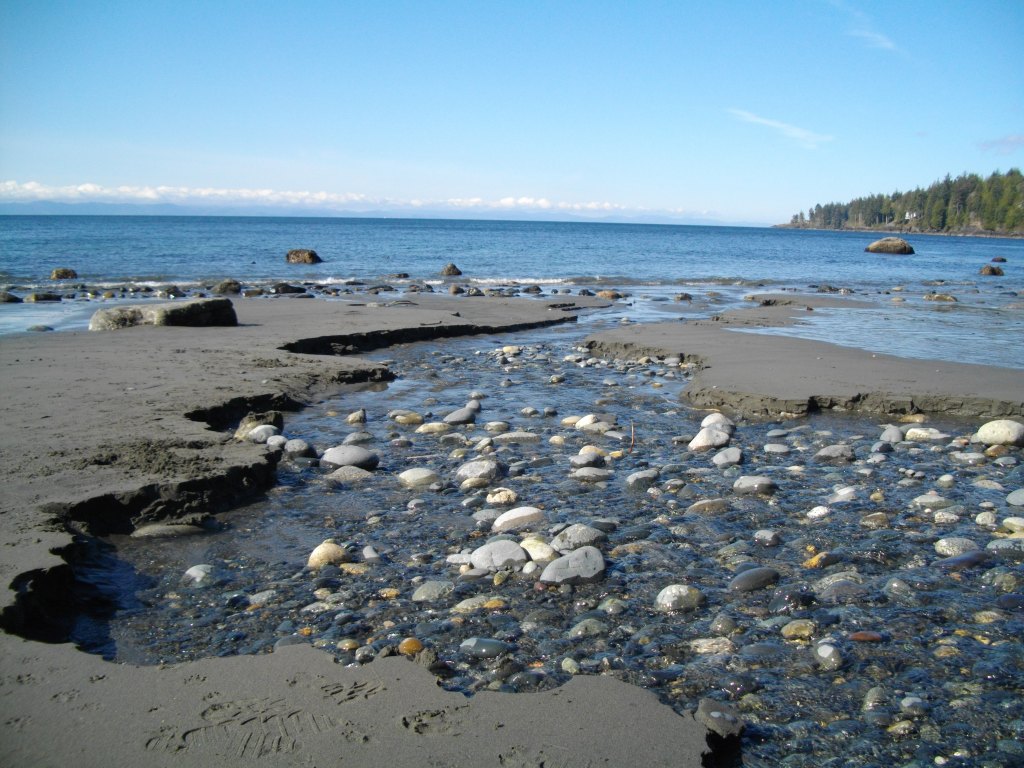
We will start with Sooke (pronounced ‘sook’). This is a small seaside town just under an hour’s drive from downtown Victoria. The road out there is long and winding and not ideal if you get motion sick, but a visit to Sooke and the surrounding area always feels like an expedition to the edge of the world and I love it. A river runs down through the town and empties out into the Sooke Harbour, and in the mouth of this river lived a type of fish, a stickleback fish, and this is where the place gets its name: T’Sou-ke, or Sooke, which was also the name of the Coast Salish band who lived in the area.
Moving on to Saanich next (don’t let the double ‘a’ throw you: it’s just ‘sa-nitch’): there is a ‘Saanich’, a largely suburban area with lots of parks, and there is a Central Saanich, which is largely rural, and there is a North Saanich, which is also very rural and where the airport and ferry are located (so when you arrive in Victoria, North Saanich is the first place you see). The name Saanich refers to an ‘elevated’ place in the language of the Straits Salish. It’s not clear which elevated place this specifically refers to; there are a few it could be, but Mt Newton in Central Saanich has been suggested, and looking at a topographical map, this makes sense, as it is a wider elevated area rather than a small mountain, of which there are a few in the area.
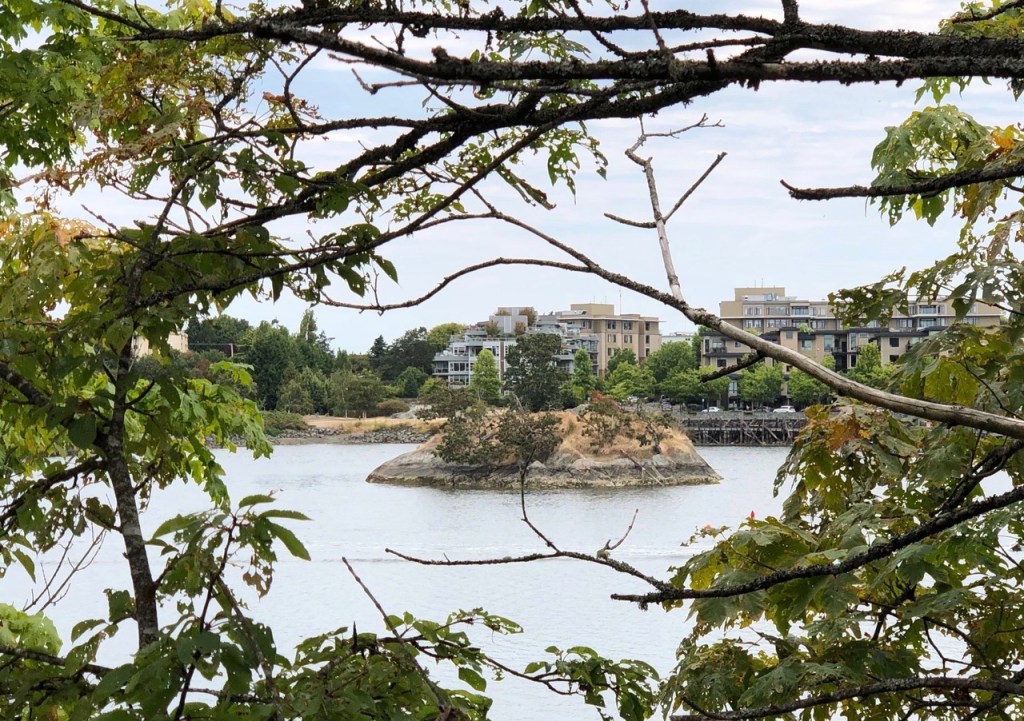
Victoria is built around a harbour, and just across this harbour is Esquimalt, quite a built-up area with a naval base on one side and a shallow inlet known as the Gorge on the other. Esquimalt (pronounced just as it looks, typically with the stress on the middle syllable and a long ‘i’) means ‘place of shoaling waters’. Shoaling is where the waves get smaller as the water gets shallower, and so far as I can tell, this description fits the Gorge very well, as it can be very shallow in parts. Further west of Esquimalt, but not actually in Esquimalt, is Esquimalt Lagoon; it, too, is very shallow in places, but the name also reflects the extent of the Esquimalt nation’s territory.
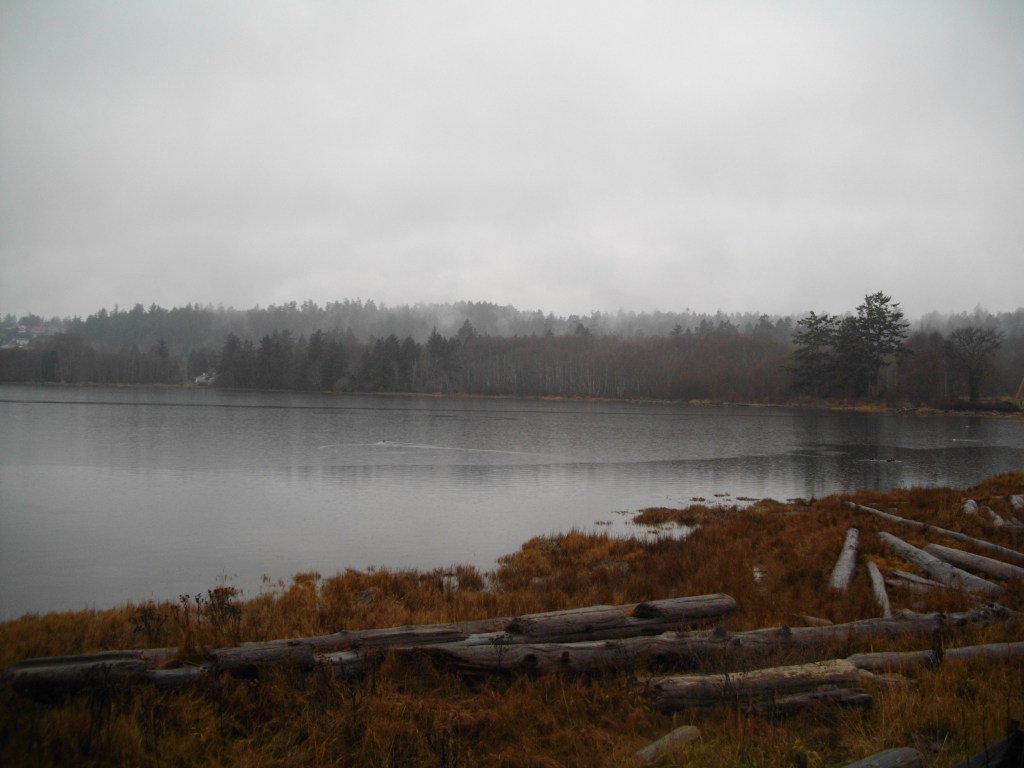
Finally, Metchosin (again, pronounced like it looks, emphasis on the middle syllable). This is a beautiful, rural, area on the way out to Sooke, and not too far from where I grew up. Metchosin is farmland and forest and sea and is a very beautiful area. But in the language of the local Straits Salish, ‘smets-shosin’ means ‘place of stinking fish’. The story goes that in the 1840s James Douglas, arriving in the area on behalf of the Hudson’s Bay Company, wanted to find out the name of the area now called Metchosin, and that this is what he was told, because a dead whale had washed ashore and the area smelled of, well, stinking fish. It is hard to say how true this story actually is, but that is said to be the origin of the name Metchosin (and yes I know a whale is not a fish but that’s not the point of this story). So those are just a few very prominent place names in greater Victoria which reflect the First Nations groups particular to the area, where they traditionally lived, and how they described the land.
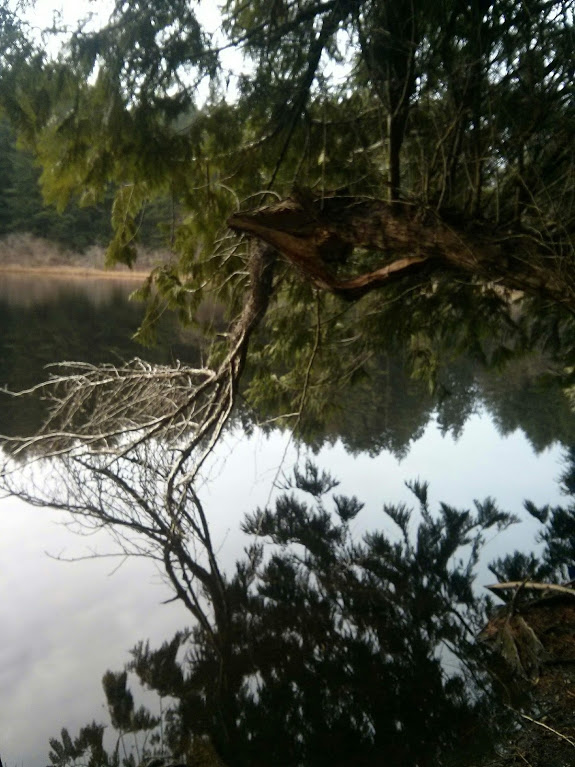
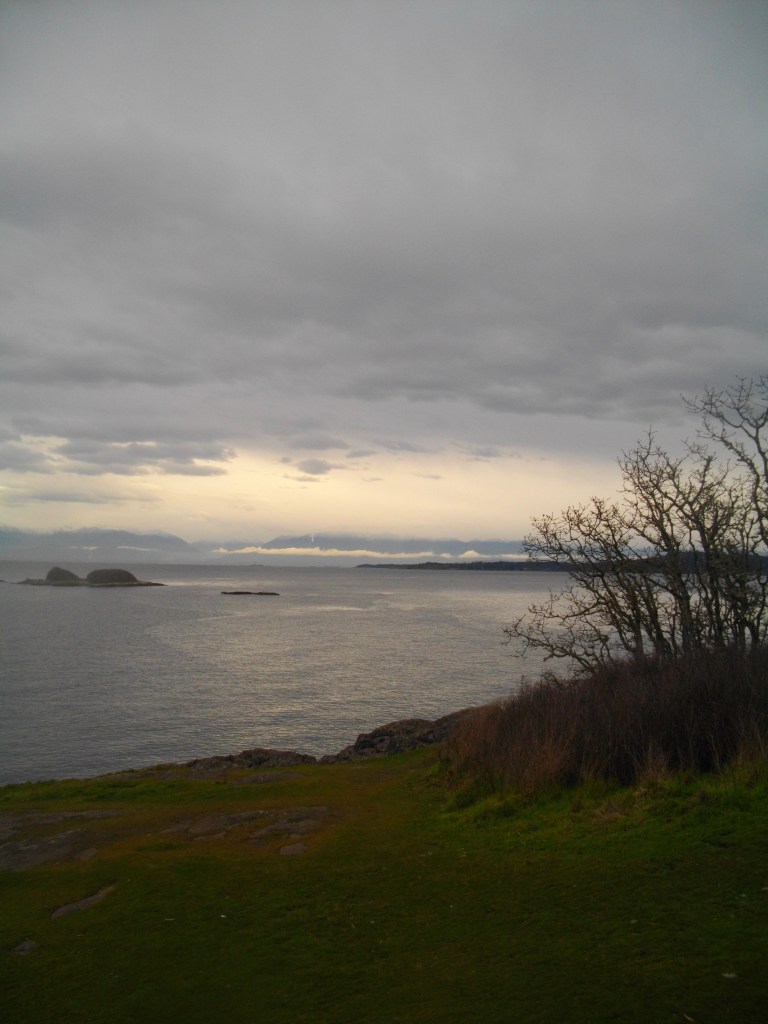
Let’s stay in Metchosin for a moment. While you’re here, you might hike around Blinkhorn Lake, named for one Thomas Blinkhorn, and early settler who had a farm in the area in the 1850s. In fact, if you do go to Blinkhorn Lake, notice the name of the road you took to get to it: Kangaroo Road. When this area was being settled in the nineteenth century, people would stake their claim to a piece of land. You forfeited your claim to said land if you left it, because someones else could then take it over, ‘jumping’ onto the land to claim it for themselves. This happened so often that the Lands Department Office thought people were jumping from place to place like kangaroos. So there we are.
We’ll wrap up our visit to Metchosin, and head back into town; if we avoid the rush hour and the main highway, the traffic might be alright. We’ll head into downtown Victoria, and take in the sight of the Inner Harbour. I think we will have to revisit Victoria in another post because this was meant to be about place names and really I just want to tell you all about Victoria. We can do that later though. For now, let’s focus: heading along the Inner Harbour, you’ll see Wharf Street, a sensible name for a street near a harbour; Government Street, because remember this is the provincial capital; and streets with names like Douglas, Cook, and Quadra, all of whose namesakes we’ve met earlier in this post. James Douglas, in fact, gave his name to other places too, as he became governor of Vancouver Island: James Bay and Mt Doug(las) in particular. There is a Bastion Square and a Fort Street, because when Victoria was first founded, it was, like so many Hudson’s Bay Company outposts, a fort, Fort Victoria. Streets like Fairfield and Hillside are named for farms and estates, because after settlers arrived, much of this land became farmland. Discovery, Pandora, and Herald streets are just a few examples of roads named after ships. I could go on and on about this. If you look into where a street downtown got its name, there is a good change it is connected to Victoria’s early settlement. Not always, of course: it might be named for a Great Lake or another Canadian city, but overall, one can see a lot of Victoria’s history in the names of its roads.
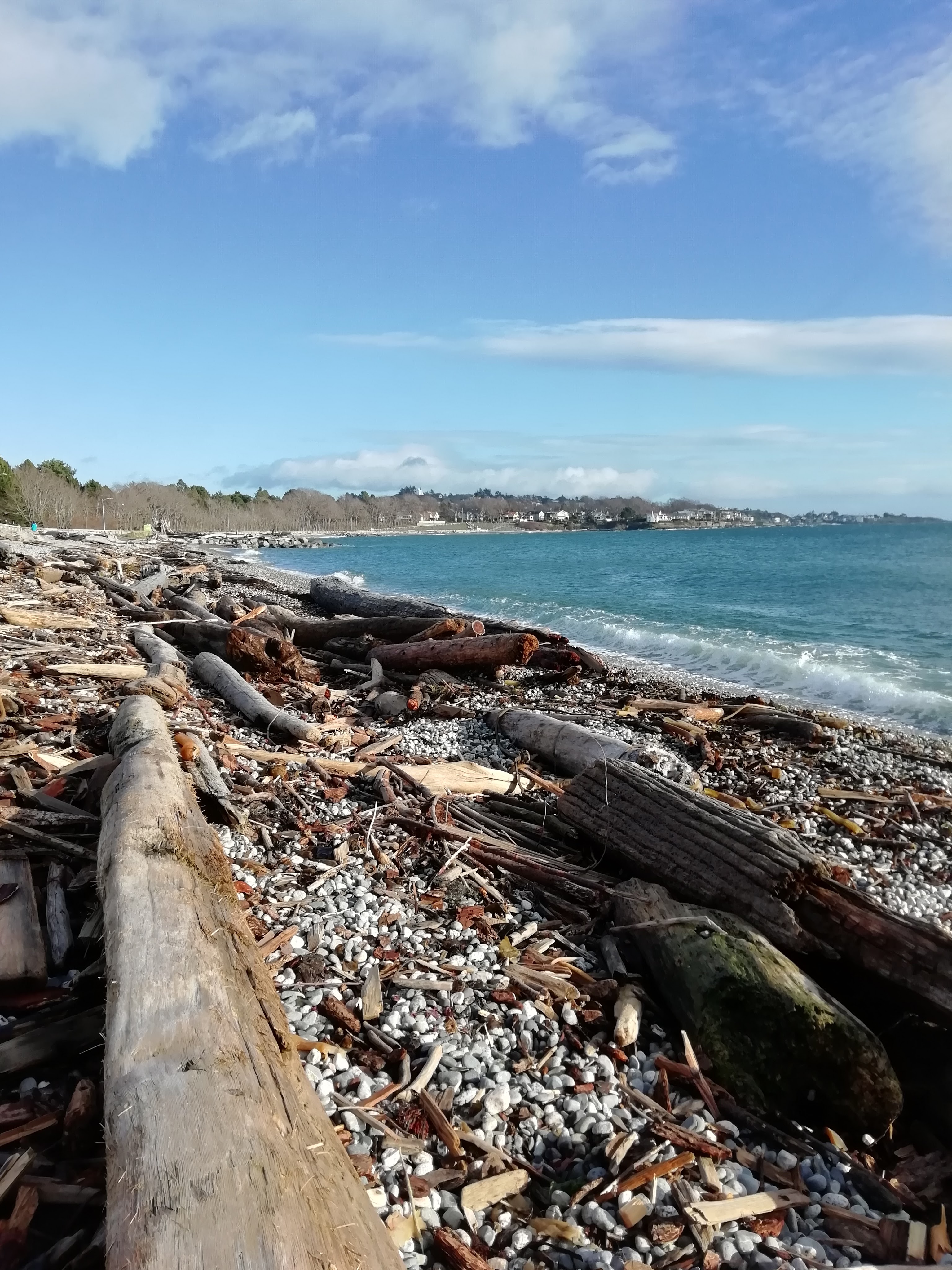
A bit further along, we will get to Oak Bay, a name which is rather self-explanatory. But why is there a road near Oak Bay called Foul Bay Road? The beach there is clean, I think, and it’s not as if there were lots of duck or birds there (‘fowl’ bay). The name may come from when Captain Vancouver tried to drop anchor in the bay but the anchor wouldn’t hold, and a sea-bottom that doesn’t hold an anchor is apparently a ‘foul’ bottom. It’s a very unique name, and no weirder than some street names elsewhere, but really doesn’t match how nice the area really is.
I actually grew up to the west of Victoria, in what used to be called ‘the western communities’ but is now known more glamorously as ‘the West Shore’. Things are a little bit newer out this way, although you do still get the occasional splash of ‘old’, which we’ll have to get into in another post. This part of Victoria is the reason I keep needing an updated map book every few years: every year, they build more and more houses, and thus have to keep building new roads, and naming these new roads, and it’s all quite a lot to keep up with. Some of these street names are pretty (a whole neighbourhood named after flowers, for instance), others are just a bit quirky (streets named after apple varieties, anyone?), and some make me glad I don’t actually live there because then I would never enjoy writing out my address.
The practice of naming places after the early farmers and landowners continues here as well. I lived on a street named for an influential pioneer family, the Wisharts, and the first two schools I attended were named for Victoria’s first postmaster and a wealthy industrialist, respectively. I also lived on a street named for a pair of brothers, although I don’t know who they were. Who were you, Terrance and Hugh?
Think about the name of the road you live on, or the neighbourhood you live in: did the developers just need something, anything, to call the road they had just built, or is there a much deeper history to the name?
Further Reading
I really wish I had a copy of this to peruse right now: Danda Humphreys, On The Street Where You Live (Surrey: Heritage House Publishing, 2001)
Always good for fact-checking things or looking up a definition: https://www.thecanadianencyclopedia.ca/en
For a more thorough investigation of place names, only applied to Vancouver’s streets, see: https://newsinteractives.cbc.ca/longform/streets

