The post before this one was all about York Cemetery, my favourite place in York. That one talked briefly about the history of the cemetery and the context for its establishment. This post is part two, about some of the points of interest within the cemetery (that I think are interesting, at least).
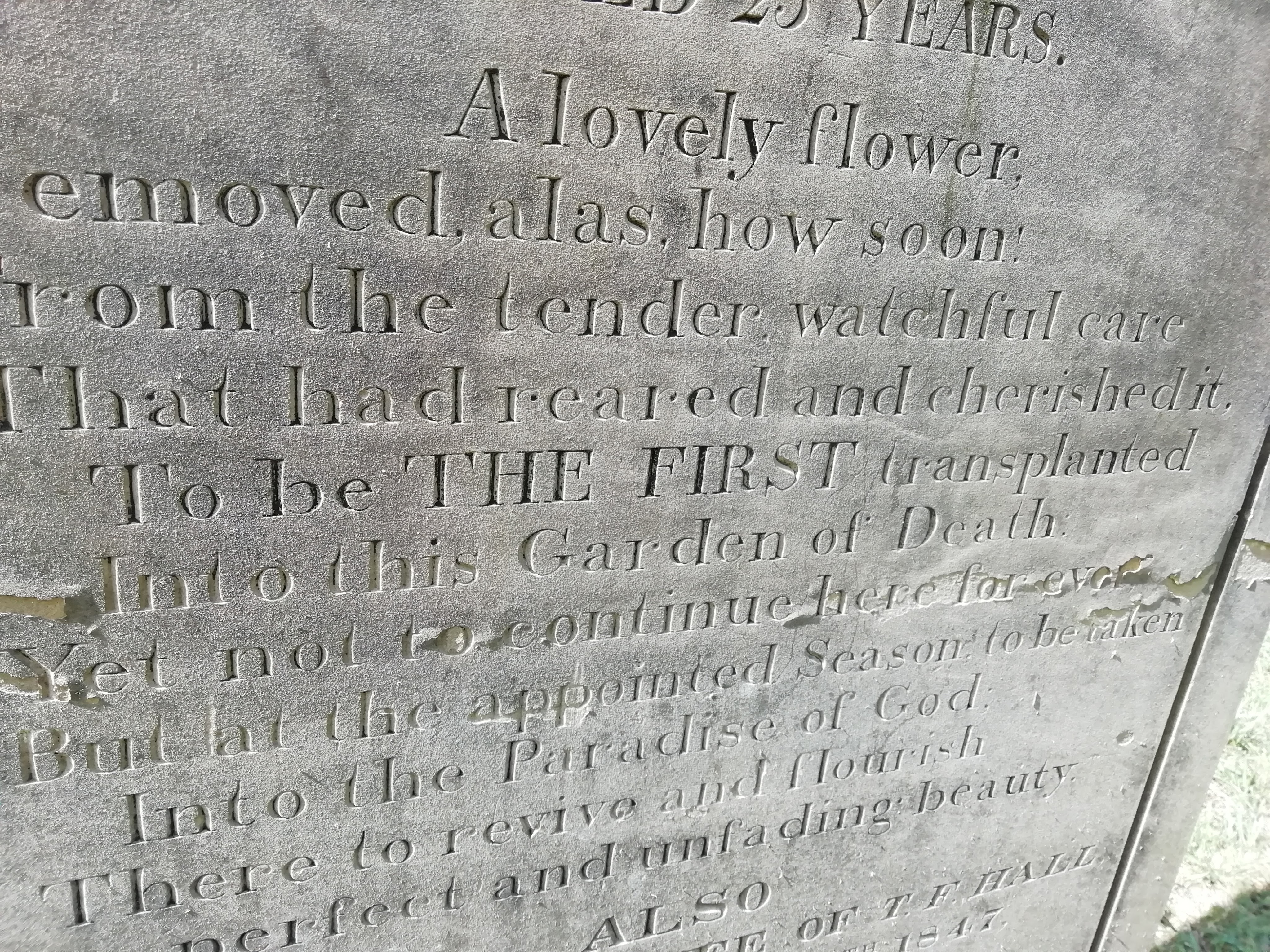
The first burial in the cemetery, in January 1837, was that of twenty-five-year-old Charlotte Hall. If you head right once you’re inside the gates, then left at the hedge, and carry on towards a headstone with the number 15015 on the side facing you, that’s hers, with the ‘garden of death’ inscription mentioned in the previous post. As to the second burial, that occurred a few months later, and is supposedly nearby, but I can’t find it. If you can find a headstone to a Maria Slater, a child, from May 1837, excellent; please direct me to it…
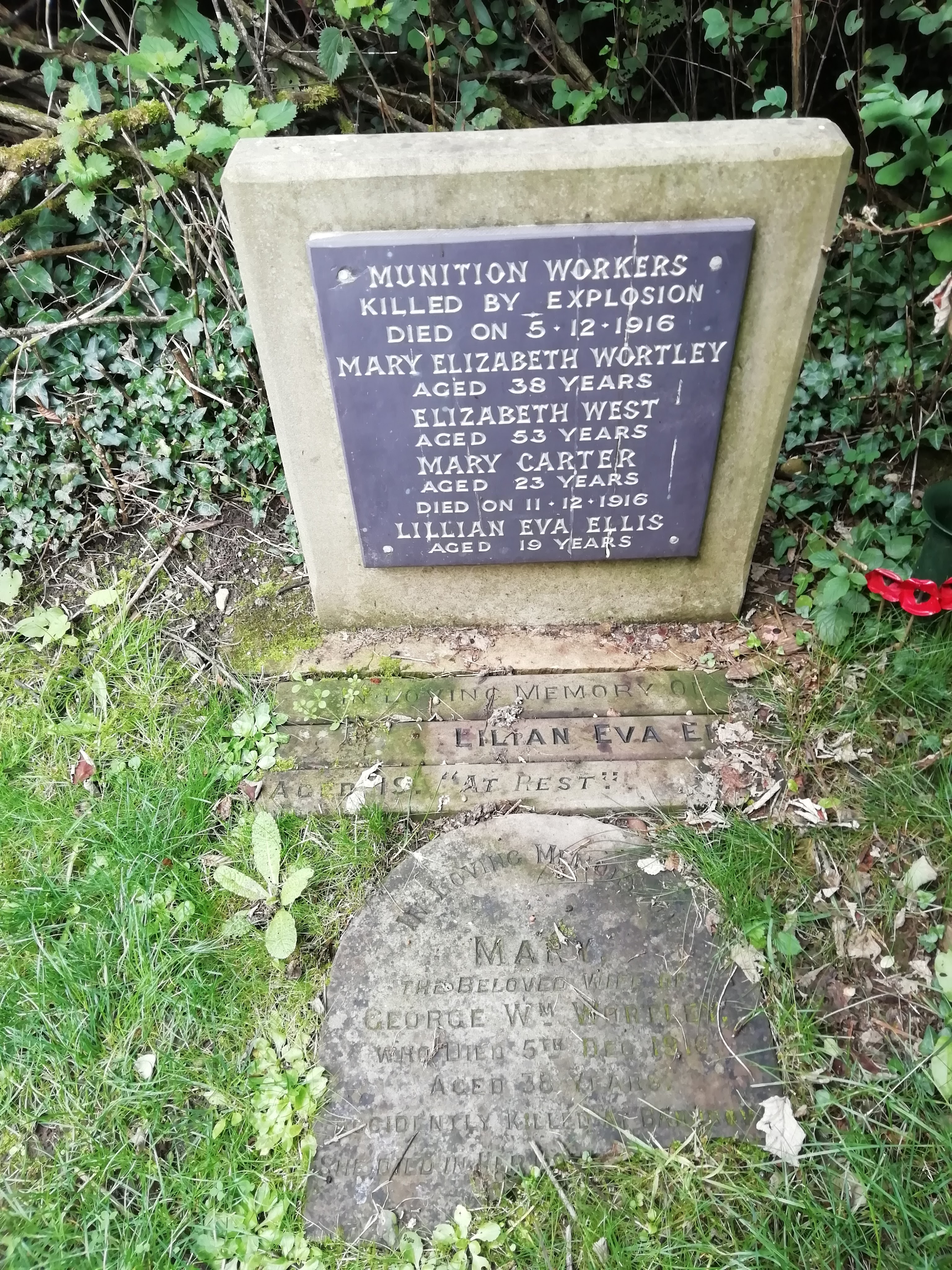
York Cemetery contains a number of war graves, maintained by the Commonwealth War Graves Commission, as well as a war memorial, erected after the First World War and damaged by a bomb that fell nearby in 1940. One grave, hiding in a corner near the back if you head left (north) upon entering the front gates, remembers four women who were killed in a munitions factory explosion in 1916. This was in Barnbow, over towards Leeds, and there were in fact thirty-five women killed in the accident; the four here lived in York. It was from this memorial that I first learned about this accident. The general public never heard about it until several years after the war. The war graves are mainly along the back in the Soldiers’ Lawn, as well as over to the right as you go in, near the war memorial.
Most graves tend to have something visible above ground, even if it is just a very simple slab. Other burial sites are more difficult to identify. These ‘public graves’ were the cheapest burial option, but it meant you were buried with strangers, and there was nothing visible to indicate who was buried in these graves. There is a grassy area behind the chapel which looks like unused burial space, but it is not: under that patch of grass are in fact five public graves, containing the victims of two cholera epidemics in the 1840s. There is a similar section of grass over near where the Barnbow women are remembered, before you get to the Soldiers’ Lawn: it is not empty space, but contains the unmarked graves of dozens of people. The next option was a second-class grave, which were often placed parallel to the paths. These were very similar to public graves but you had the option of an inscription on the grave slab, a step up from the anonymity of a public grave. Private graves are the ones occupied by one person or by people from the same family, and they might be of varying degrees of elaborateness. There are also burials beneath the chapel as well, in the catacombs, but these are all from before 1881. There is no specific section for the public graves; they sit side-by-side with the private and second-class ones.
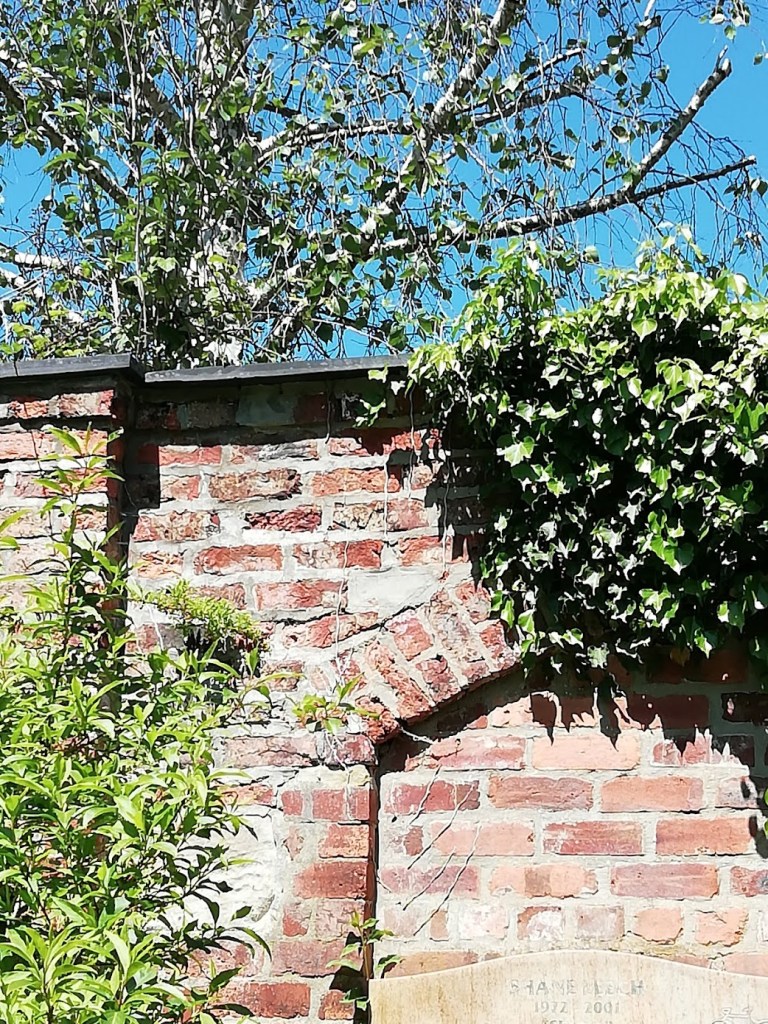
Behind the northern boundary wall was the stone yard, which is now just houses. You can still see an archway that was once a doorway through the wall. The stoneyard is visible on the 1852 map of York, but the archway, and of course some of the monuments in the cemetery itself, are all that remain of it now. Look for ‘Cemetery Co’ at the bottom of a memorial; that means it was carved here at the stoneyard.
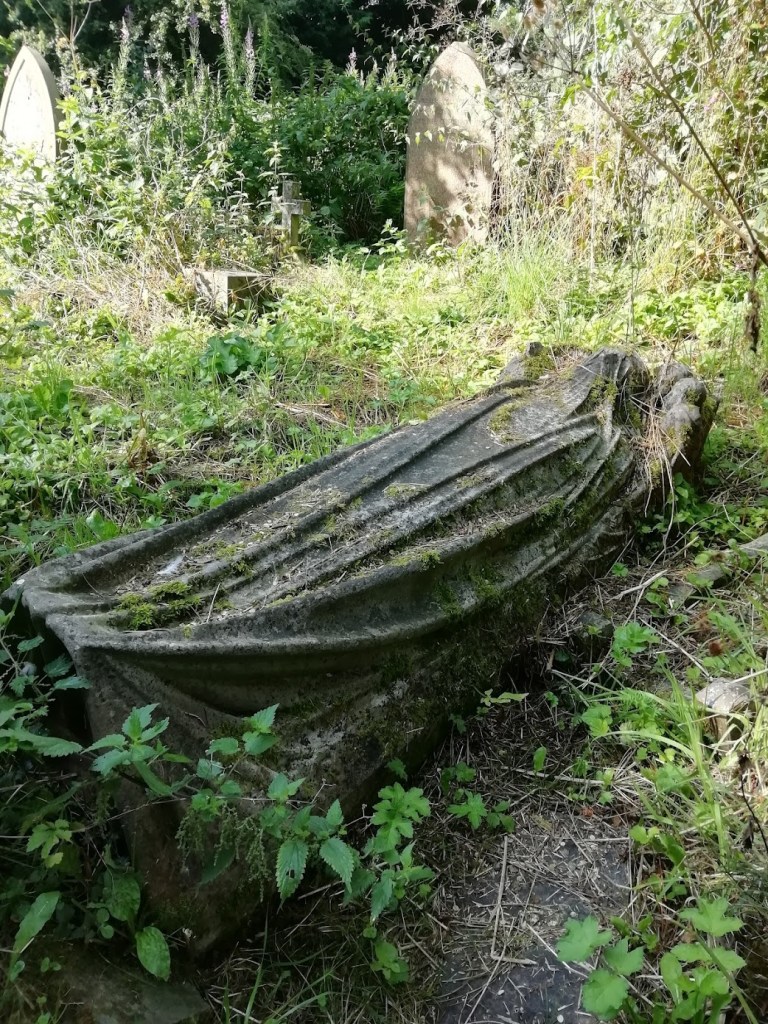
One grave that is very distinctive is that of one Charles Ellis Hessey. You can see it, sometimes quite overgrown, at the top of the Fernery if you’re heading up to the northeast end. It is clearly meant to be a person lying beneath a shroud, surrounded by angels, and I’ll be honest, when I first saw it I found it most unsettling to look upon (and I say that as someone who thinks cadaver tombs are interesting…that’s another story though). Charles was a railway clerk who died of a lung disease at age 36; this was carved by his brother who was a sculptor, and there are six members of their family interred in this particular grave (the brother is buried elsewhere in York Cemetery). I wish there was some interesting story about this memorial, but there isn’t really. I mention it because it’s one that you might think ought to have some colourful story behind it, but alas, it does not, or if it does, we don’t know what it was.
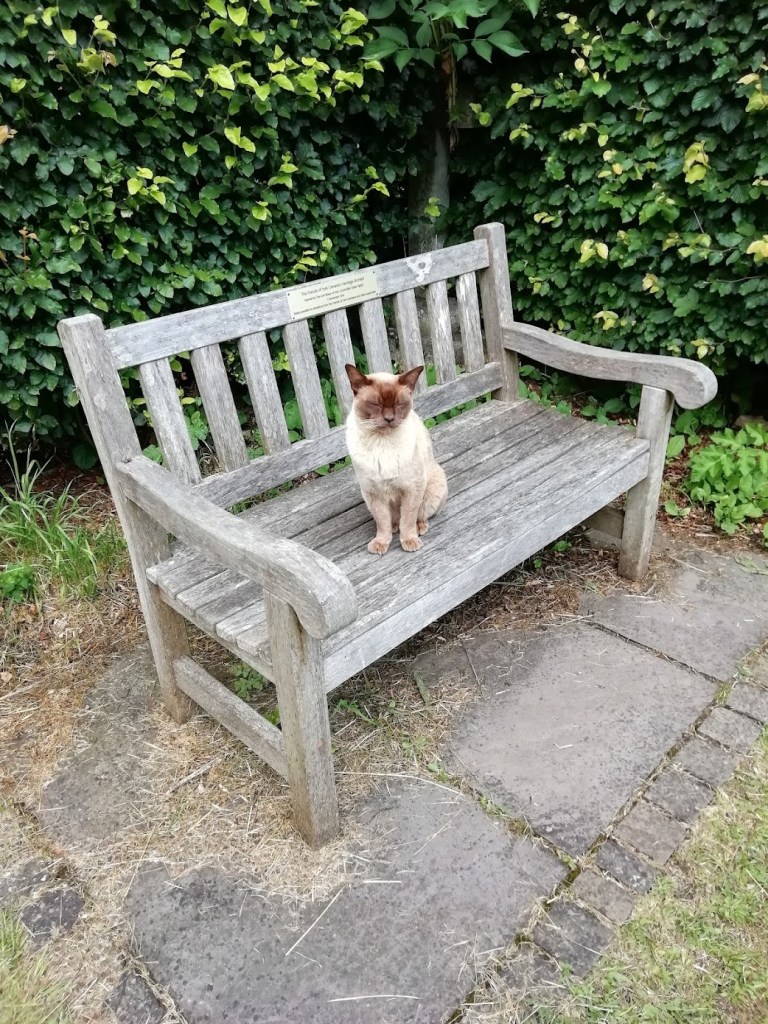
There is a lovely little herb garden surrounded by a beech hedge towards the southeast end; each of the graves there are planted up with different herbs and flowers. There are beehives right at the very back of the cemetery; I have tasted the honey from these hives and can confirm it is very good. The point of this post is really just to mention a few highlights, not to talk about everything. Every time I go I notice something new, whether it be a name, a decoration on a headstone, or a different cemetery cat. Richard Chicken might win the prize for the most unusual name. Look closely for the Minster carved on William Wilkinson’s headstone. The golden cemetery cat is there most often, usually over near the herb garden, but there are other cats too. There is a lot to see.
This post was called ‘The Mystery Grave’, though, so let’s end by actually talking about a mystery grave. Opposite the Hessey memorial there is a very fancy-looking cross, carved to look like it’s made of wood and covered with creeping ivy. It is the grave of one Mary Swann, described here as an orphan of St Stephen’s Orphanage in York who died, age 12, in 1873. My first question, therefore, was why a child from an orphanage would have such an ornate memorial.
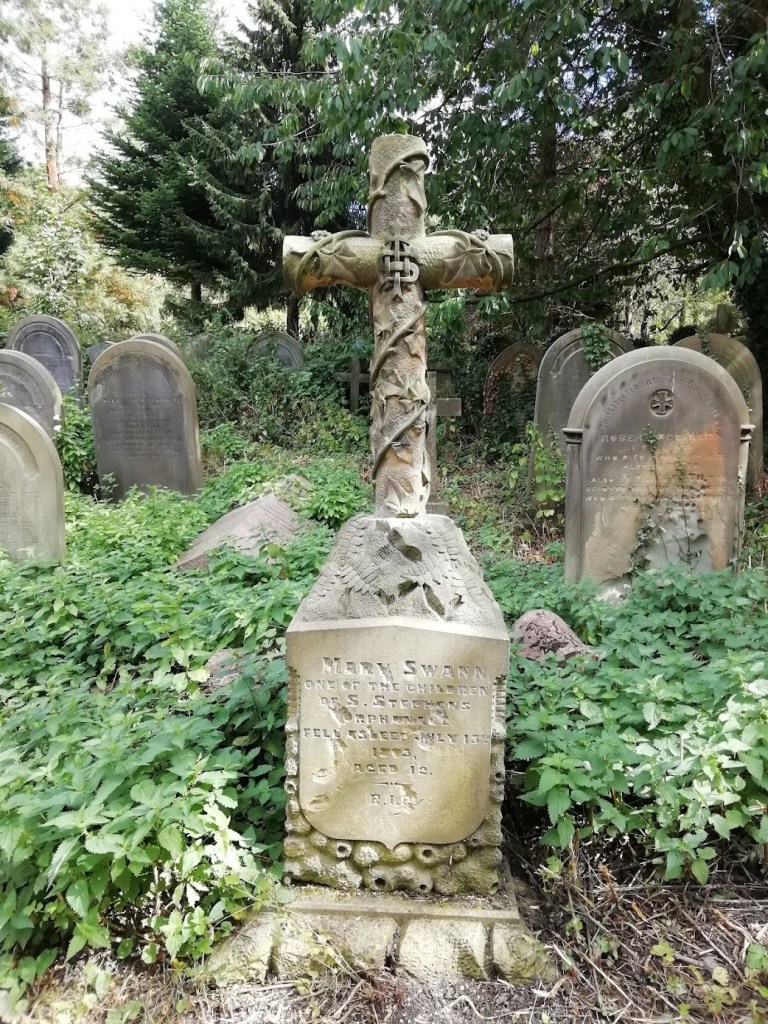
I looked at the other sides of the grave, and there were other people commemorated there too, all of whom, including Mary, died within about a year and a half of each other: there was Edward Froud and his wife Maria, one Thomas Blencowe, and a Matilda Johnson who was ‘late of Earl’s Colne, Essex’. What was the connection between all of these people, that they would all be included on the same memorial? I had to know!
It was the genealogists at the cemetery who filled me in on what was what; I take no credit for the mystery grave being a mystery grave no longer. Essentially, when Mary Swann died, the matron of St Stephen’s Orphanage bought the grave. The matron’s deputy was the daughter of Edward Froud and his wife, and the wife of Thomas Blencowe. The matron herself was from near Earl’s Colne, and so Matilda Johnson may have been a relative who was living with the matron. No one knows why it is carved in such a unique (and probably expensive) style, but it was carved in Scarborough, not York, again for reasons unknown; the Dean of York may have been involved somehow in some kind of charitable capacity, since he was the patron of St Stephen’s Orphanage.
So next time you find yourself in a cemetery, maybe you’ll find a ‘mystery grave’ to demystify…
Further Reading
The history of the cemetery, once again, is an excellent starting point for learning more: This Garden of Death: The History of York Cemetery 1837-2007, by Hugh Murray (available directly from the cemetery)
Once again, the 1852 map of York, on which the cemetery appears looking much smaller than it does today: https://interactivemaps.uk/york-1852/#17/53.9622/-1.0821
If you visit the cemetery, I can highly recommend their self-guided and guided walks. They get you noticing things you might not, and particularly with the guided walk I went on, they really bring the lives of everyday York people to life: https://www.yorkcemetery.org.uk/self-guided-walking-trails

