I have been interested in the history of education for years now. I have also felt drawn to learn about the early modern period (c. late fifteenth to mid-seventeenth centuries) and English history, so now early modern English education has become my particular area of interest. This post will address a few of the most common questions I have been asked when people learn what it is I study. This is a topic I could go on about, though, so this will probably be the first of multiple posts on the subject!
A note about the title to this post: A Shorte Introduction of Grammar was the (abbreviated) title of one of the Latin grammar texts written by William Lily, and used as the standard textbook across England after 1540.
The first frequently asked question is: were there schools back then, i.e. in the early modern period? Yes, there absolutely were. The late fifteenth through to the early seventeenth centuries was a key time in their development in England, although let’s not overemphasise the Reformation too much, especially not in England (that’s a common misconception: either people think there was very little in the way of educational provision back then, or they think the Reformation came along and required education for all. The answer seems to be somewhere in the middle).
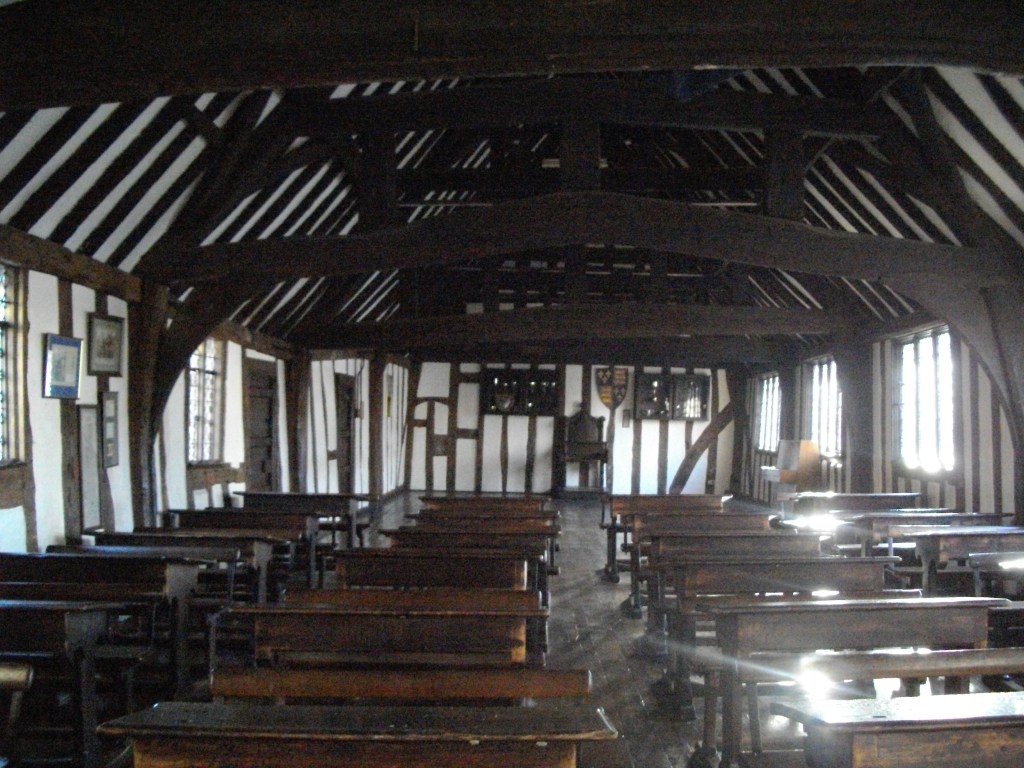
I specifically study grammar schools, which were one of a few types of educational opportunities available in England during this period. There were ‘petty schools’ in which young children learned to read, and there was the option of simply having a literate parent or neighbour teach you how to read, in a very informal setting. There were grammar schools, open only to boys; there was private tuition for the very wealthy, to which girls might sometimes have access. There was on-the-job practical learning and apprenticeships for certain trades; there were the Inns of Court for studying law, and finally there were the two universities, Oxford and Cambridge.
This is just talking about England, by the way; I’ve come across a few grammar schools in Wales which were similar to their English counterparts in terms of how they were run, but Scottish education was really doing its own thing at this point in history, because remember, it was a separate kingdom for most of the period under consideration here.
Nowadays we tend to think of grammar schools as having a bit of an elitist connotation, and this has perhaps given rise to the idea that grammar school education must only have been for the wealthy. This was not entirely the case in the early modern period – true, not everyone had the opportunity or encouragement to attend one, but in theory, the education provided at a grammar school was available, and taken up by, most boys from the ‘middling sort’ and up. The son of a skilled craftsman might attend, for instance, while the son of a poor farmer would probably not. The son of a gentleman might attend as well, but this really only starts to happen in the later sixteenth century, and usually those boys attended the bigger, wealthier schools; otherwise they were tutored at home. A fact I love is that Eton, established by Henry VI in 1440, was not founded for the posh boys: no, Henry intended it to train less well-off boys to become priests (it is referred to early on as a ‘college of sad priests’, ‘sad’ in this case meaning sober and serious). Within a century of its foundation, Eton had become one of ‘the great schools’, setting the pattern for what kind of texts were used in other schools, and was quite well-off, attracting some of the best schoolmasters, but the difference between its founder’s intention and its reputation today is one I find fascinating.
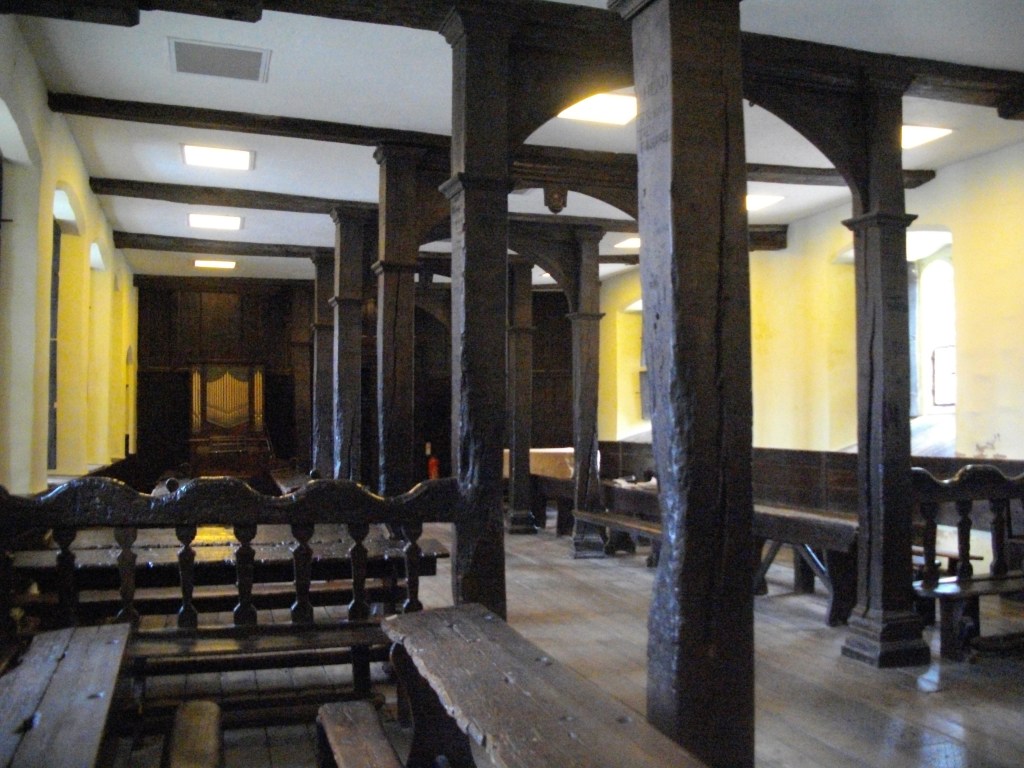
Why were they called grammar schools? The clue is in the name: they taught Latin grammar. They taught other things as well, but not many other things, which we’ll get to shortly.
Another common question is whether schools were run by the church. The answer is both yes and no: yes, you would see a lot of schools attached to cathedrals or religious houses prior to the Reformation, which might equip you for a role in the church. And yes, particularly after the Reformation, education was to a limited extent monitored by the church. But no, not everyone who attended school went on to a career in the church, and no, the church was not technically ‘in charge’ of education. It had provided a great deal of educational opportunity, and it monitored who was allowed to teach in schools and what kind of religious instruction they provided, but there was not as much of a link between education and the church in this period as one might think, and there was surprisingly not a lot of religious material being taught in grammar schools either.
Let us return to the curriculum, which as we’ve said was mostly Latin. These schools were teaching Latin grammar and Latin literature. There was no standard curriculum across England, but there was a standard grammar textbook used by every school after 1540, and a fairly standard body of classical texts which any boy who had attended any grammar school would have studied. There was almost nothing in the way of modern languages, history, mathematical instruction, science: sure, classical history, and some mathematics and science might appear in the Latin texts the boys studied, but they were not, so far as we can tell, subjects in their own right. Where these subjects were learned is a whole other subject in itself…
A little later in the sixteenth century, Greek started to appear in some schools. The idea behind learning Greek was that the Latin authors (Cicero, Virgil, and the rest) had had an understanding of Greek, which had made them exemplary Latin writers; both languages, Latin and Greek, were part of the ideal humanist curriculum at the time. We’ll come back to Greek in another post, I think, because there is lots to say about it. It was an ideal that was not always followed through in practice for most schools. Finally, there was a small amount of religious instruction: prayers at the start and end of each day, some study of the catechism once a week, and a visit to church on Sunday. This is not a lot of religious instruction compared to other parts of Europe in this period.
Another question is what the school day looked like. In general, this followed a fairly standard pattern: the boys were in school from about 7 am until about 5 pm, with a couple of hours for lunch, and they attended school on Saturdays as well. In addition to this, they attended church services on Sundays with their classmates and the schoolmaster, and might be tested on the content of the sermon in school on Monday. One thing that comes up frequently in school rules is the fact that boys were meant to speak Latin to each other, even if they were playing during the lunch break; this reinforces the fact that these schoolboys were acquiring a serious knowledge of Latin, reading it, writing it, translating it, and even speaking it. They were practising writing letters and speeches, and constructing arguments, things that would serve them well in their later careers.
This brings us to why girls did not attend grammar schools. They were not allowed to hold any sort of public office, so the thinking was that they wouldn’t need to know Latin and wouldn’t make use of that rhetorical training. Certainly there were many well-educated women in this period, but they were members of the nobility or royal family, or had fathers who believed in educating their daughters; they had been tutored at home, and their education was often more ornamental than practical. Such women, like Elizabeth I, Jane Grey, or the daughters of Thomas More, for instance, were very much the exception. More commonly, girls might learn to read, and perhaps to write, in English.
How did one establish a grammar school? This might often be done by one person, who had an interest in providing educational opportunity to their local community. Men or women could do this, provided they had the means to do so, ether leaving money and land in their wills for the purpose, or endowing the school in their own lifetime. Schools were funded by the rents paid on the land belonging to the school, which often meant that the students did not pay to attend the school. Some school founders were simply carrying out a charitable act by founding a school, while some wanted to encourage better religious understanding in the area by founding a school (this is the motivation for a lot of the bishops and senior clergy who were founding schools in the north of England, for instance). Often there will be an obvious connection between the founder and where the school was established: it might be where the founder lived, or where he or she had been born. Schools might also be founded or re-founded in the monarch’s name: this was very common during the reign of Edward VI, hence the many King Edward VI Grammar Schools throughout England even today (and that’s another point: many of these medieval and early modern foundations still operate as schools today).
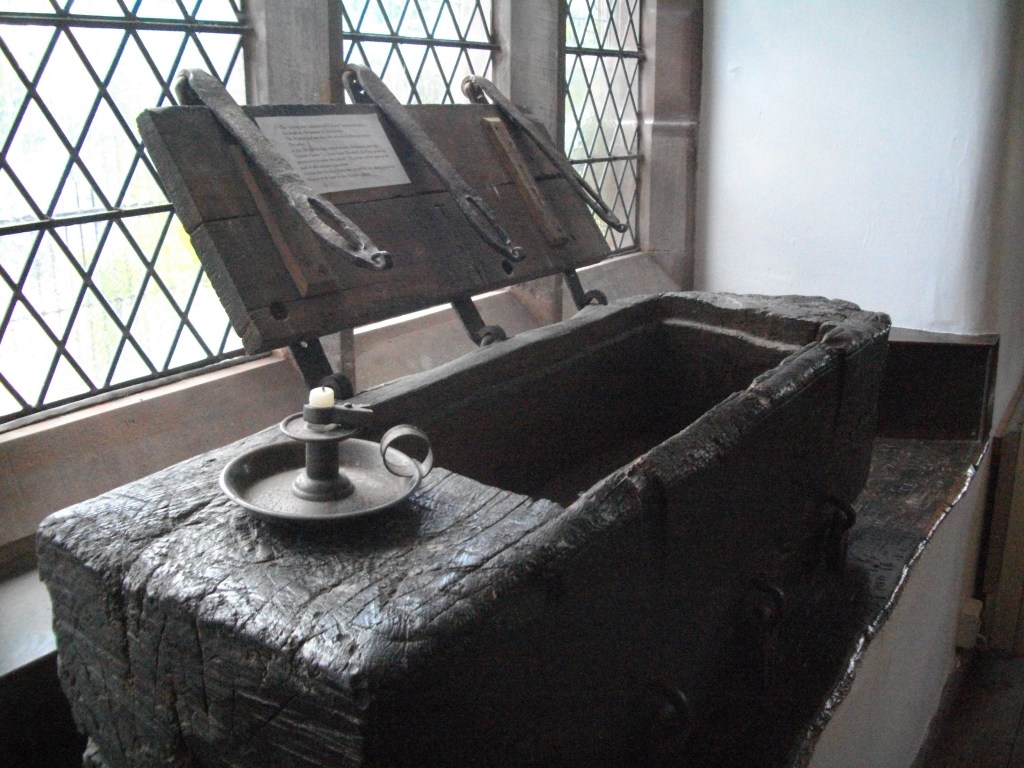
Finally, what kinds of sources do we have about early modern English grammar schools? Some of the most common are to do with founding the schools. If someone wanted to found a school, they would receive Letters Patent, which allowed them to acquire a certain amount of land for the school, the rents and profits therefrom making up the school’s income. These documents tend to be quite formulaic, being legal documents, but they were often followed up by the actual rules, or statutes, for the school. These are what I love to read, because they tell you why the founder established the school, what would be taught there, what kind of rules the students and the schoolmaster had to follow, how the schoolmaster should be chosen…the one for Archbishop Holgate’s School in York is particularly detailed, as are the ones for Wakefield and Guisborough schools, just to give a few examples. These types of sources are often found in county record offices.
Unfortunately, sources linked to the students and schoolmasters themselves, or to actual day-to-day classroom practice, are much more rare. There are a few notebooks which survive, kept by students; schoolmasters’ licenses and even letters of recommendation sometimes survive, and the texts books read in the classroom are sometimes extant, but those would likely have been used and passed down until they fell apart, hence their low survival rates. Even rarer are lists of students, but these do survive sometimes as well. One of my favourite sources I have read was a notebook kept in the 1560s by a boy called William Badger. He attended Winchester College, which, to be fair, was one of the bigger, better-endowed schools, but its students still shared in that classical curriculum taught in every other grammar school. He mostly wrote in Latin, but at one point he says that the master will finally let him move up to the fourth form. I love this because it’s so relatable, someone being excited that they get to move on and do something new, and it’s such a window onto the day-to-day experience of a schoolboy over four centuries ago.
I’m going to end this here; thank you for sticking with this essay-length ‘short introduction’…there is so much I could have said but didn’t, so I’ll be back with this again, I am sure.
Further Reading
A lot of the best books and articles on the subject of education tend not to be very widely accessible outside of academia. The books are expensive and the journal articles are often only available through subscription. However:
If you visit http://etheses.whiterose.ac.uk and have a browse through the University of York history theses from 2015, you will find one on this topic. It’s mine. Feel free to read it; most of the PhD theses on that database are freely accessible. Ignore the convoluted formatting of my bibliography, but the source material therein is all good.
Should you wish to learn about early modern English schoolmasters (who doesn’t?!), I have an article out in Renaissance Studies journal, freely accessible, which is rare in academic publishing and I was glad to have the chance to publish this ‘open access’: https://onlinelibrary.wiley.com/doi/10.1111/rest.12710
Also, if you want to listen to me talk about this subject for 40 minutes, you can do so here: https://www.youtube.com/watch?v=zjN16bx6UN0&list=PLQxOhDKlslHSvTN2ST6t68IGlVlAT5Dg6&index=12 (and check out some of the other episodes in this podcast too!)

